




Shop Less, Dress Better: The Wardrobe Reset Is the New Shopping Spree
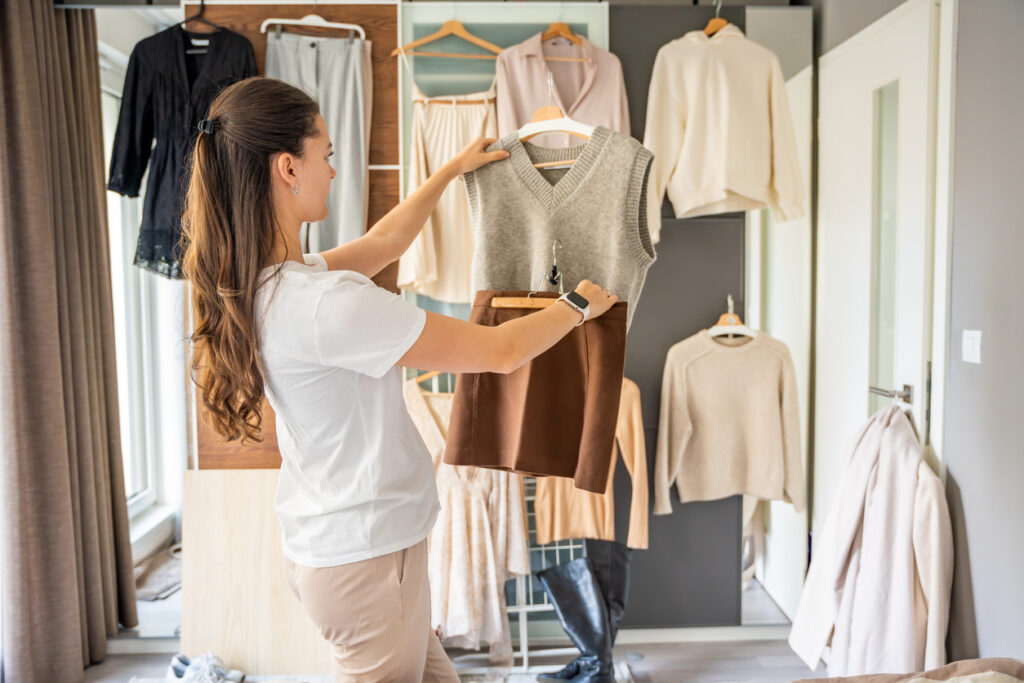
For
decades,
the
rhythm
of
fashion
has
been
defined
by
accumulation.
A
new
season
arrived,
and
with
it,
the
expectation
to
refresh—to
add,
replace,
update.
But
lately,
that
cycle
feels
increasingly
out
of
sync
with
how
women
actually
live—and
dress.
Instead
of
looking
outward
for
what’s
next,
the
most
compelling
shift
in
style
is
happening
much
closer
to
home:
inside
the
wardrobe
itself.
Call
it
the
wardrobe
reset.
Rather
than
chasing
newness,
more
women
are
stepping
back
to
reassess
what
they
already
own—editing,
refining,
and
rethinking
their
closets
with
a
sharper,
more
intentional
eye.
It’s
a
quieter
approach
to
fashion,
but
a
far
more
impactful
one.
Truthfully,
great
style
has
never
been
about
how
much
you
have.
It’s
about
how
clearly
you
understand
it.
This
shift
is,
in
many
ways,
a
response
to
overload—but
also
to
reality.
As
the
cost
of
living
continues
to
rise,
the
idea
of
rebuilding
a
wardrobe
every
season
feels
not
just
excessive,
but
increasingly
impractical.
Investment
pieces
are
exactly
that—investments—and
even
trend-driven
shopping
has
become
more
considered.
The
wardrobe
reset
reflects
a
growing
awareness
that
style
needs
to
be
sustainable
not
only
aesthetically,
but
financially.
At
the
same
time,
after
years
of
relentless
trend
cycles
and
an
endless
stream
of
inspiration,
getting
dressed
has
become
paradoxically
more
complicated.
More
options,
more
ideas,
more
noise—and
yet,
less
clarity.
The
wardrobe
reset
cuts
through
that.
It
asks
a
simple
but
surprisingly
revealing
question:
What
do
I
actually
wear?
The
answer
is
rarely
what
you
expect.
Pieces
that
once
felt
essential
often
reveal
themselves
to
be
aspirational
rather
than
practical.
Others—overlooked,
under
worn—suddenly
feel
right
again
when
styled
with
intention.
The
process
becomes
less
about
decluttering
for
the
sake
of
minimalism,
and
more
about
alignment:
a
wardrobe
that
reflects
your
life
as
it
is
now,
not
as
it
once
was,
or
as
you
imagined
it
might
be.
What
emerges
is
a
different
kind
of
discipline—one
rooted
in
editing
rather
than
acquiring.
Shopping,
when
it
happens,
becomes
more
precise.
There
is
less
impulse,
more
consideration.
Each
addition
has
to
earn
its
place,
not
just
visually,
but
functionally.
Does
it
work
with
what
you
already
own?
Does
it
fit
the
way
you
actually
get
dressed
day
to
day?
If
not,
it’s
no
longer
worth
it.
This
doesn’t
signal
the
end
of
shopping—it
simply
redefines
it.
Fashion
remains,
at
its
core,
about
discovery
and
evolution.
The
difference
now
is
intention.
Instead
of
buying
into
a
trend
wholesale,
women
are
selecting
pieces
that
fill
specific
gaps
or
elevate
what
they
already
have.
A
sharply
cut
blazer,
the
right
pair
of
trousers,
a
shoe
that
changes
the
tone
of
an
entire
outfit—these
are
thoughtful
additions,
not
reactive
purchases.
The
shopping
spree
hasn’t
disappeared;
it
has
become
far
more
edited.
At
the
same
time,
the
idea
of
“shopping
your
own
closet”
has
taken
on
new
relevance.
Styling—once
treated
as
an
afterthought—becomes
central.
A
familiar
blazer
feels
different
over
a
dress
instead
of
denim.
A
neglected
pair
of
shoes
reframes
an
entire
look.
The
novelty
isn’t
in
the
item
itself,
but
in
how
it’s
worn.
There’s
also
a
subtle
shift
in
what
we
define
as
luxury.
It’s
no
longer
about
constant
newness
or
recognizability.
Increasingly,
it’s
about
ease,
consistency,
and
confidence—the
ability
to
reach
into
your
closet
and
know
it
will
work.
To
have
fewer
pieces,
perhaps,
but
better
ones—and
to
wear
them
often.
None
of
this
is
about
restriction.
If
anything,
it’s
about
freedom—the
freedom
that
comes
from
knowing
your
style,
rather
than
searching
for
it.
The
wardrobe
reset
isn’t
a
rejection
of
fashion,
but
a
refinement
of
it.
Because
in
the
end,
the
most
modern
way
to
update
your
style
isn’t
to
buy
something
new.
It’s
to
see
what
you
already
have
more
clearly.

