





How to Use Blush Blocking to Lift and Sculpt Your Face—No Contour Needed
For
years,
sculpted
cheekbones
meant
one
thing:
contour.
Carefully
mapped,
meticulously
blended,
and
often
just
a
little
unforgiving
in
natural
light.
But
in
2026,
the
approach
to
shaping
the
face
has
shifted—and
blush
is
now
doing
the
heavy
lifting.
Blush
blocking
is
a
modern
blush
technique
that
focuses
on
strategic
placement
rather
than
shadow.
Instead
of
carving
out
the
face
with
bronzer
or
contour,
this
approach
uses
concentrated
areas
of
blush
to
create
lift,
structure,
and
dimension
in
a
way
that
feels
softer—and
far
more
wearable.
Unlike
traditional
draping,
which
is
diffused
and
romantic,
blush
blocking
is
slightly
more
intentional.
The
color
is
visible.
The
placement
matters.
And
the
effect
can
subtly
reshape
your
features
without
looking
overly
done.
What
makes
it
especially
appealing
is
its
simplicity.
Where
contour
often
requires
multiple
products
and
precise
blending,
blush
blocking
can
streamline
your
routine
down
to
one
key
step.
The
key
to
blush
blocking
is
placement.
Here’s
how
to
make
it
work
for
you:
-
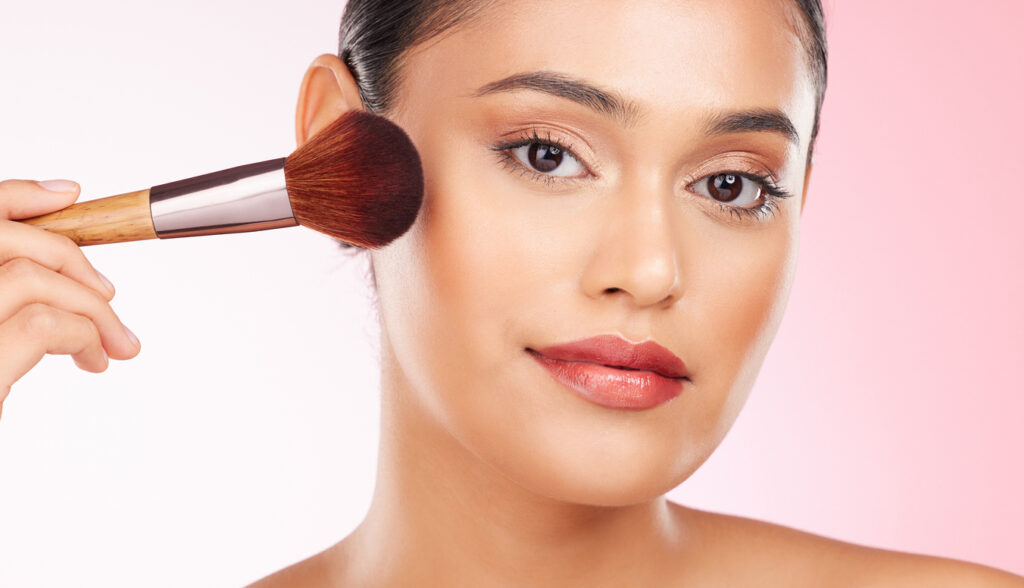
Place
it
higher
than
you
think
Apply
your
blush
to
the
upper
cheekbones,
slightly
above
where
you
would
normally
place
it.
This
instantly
creates
a
lifting
effect
and
draws
the
eye
upward. -
Blend
toward
the
temples
Instead
of
focusing
on
the
apples
of
the
cheeks,
blend
the
color
outward
and
slightly
upward
toward
the
temples.
This
elongates
the
face
and
adds
structure
without
contour. -
Keep
the
center
of
the
face
softer
Avoid
placing
too
much
product
directly
on
the
center
of
the
cheeks.
Concentrating
pigment
on
the
outer
areas
creates
that
subtle
sculpted
effect. -
Don’t
over-blend
This
is
where
blush
blocking
differs
from
traditional
techniques.
You
want
softened
edges—but
not
complete
diffusion.
The
placement
should
still
be
visible. -
Choose
slightly
bolder
shades
Soft
pinks
and
peaches
work,
but
richer
tones—like
berry,
rose,
or
terracotta—help
create
more
dimension
and
make
the
technique
stand
out.
Cream
and
liquid
formulas
tend
to
work
best,
as
they
melt
into
the
skin
while
still
holding
their
shape,
giving
that
modern,
skin-like
finish.
Blush
blocking
taps
into
a
larger
shift
in
makeup
right
now:
moving
away
from
overly
sculpted,
high-definition
looks
and
toward
something
more
intuitive.
It
enhances
the
face
using
color
rather
than
shadow,
which
reads
fresher
and
more
natural
in
real
life.
Applied
lightly,
it
gives
a
soft,
lifted
everyday
look.
Built
up,
it
can
feel
more
directional
and
editorial—without
requiring
expert-level
skill.
If
your
makeup
routine
has
been
feeling
a
little
overworked
lately,
this
is
an
easy
reset.
Sometimes,
the
most
modern
way
to
sculpt
the
face
isn’t
about
adding
more—it’s
about
placing
one
thing
better.

