









Polished ‘Old Money’ Dressing Is New Fashion Status Symbol
For
much
of
the
past
decade,
fashion
status
was
measured
by
visibility—logos,
viral
moments,
and
trends
designed
to
perform
on
screens
rather
than
in
real
life.
Today,
that
equation
is
quietly
changing.
In
a
cultural
moment
defined
by
saturation
and
speed,
Old
Money,
polished,
classy
dressing
has
emerged
as
the
clearest
marker
of
modern
style.
This
shift
reflects
a
broader
recalibration
within
fashion.
After
years
of
aesthetic
excess
driven
by
social
media
algorithms,
consumers
are
gravitating
toward
clothing
that
feels
stable,
enduring,
and
personal.
Polished
dressing
is
not
about
perfection
or
rigidity;
it’s
about
clarity.
The
clothes
communicate
confidence
without
explanation,
relying
on
fit,
fabric,
and
proportion
rather
than
novelty
to
make
their
point.
Designers
have
been
signaling
this
transition
for
several
seasons.
Brands
such
as
Loro
Piano
and,
Giorgio
Armani
continue
to
define
modern
elegance
through
restraint,
offering
collections
built
on
impeccable
tailoring
and
quiet
luxury.
Even
houses
historically
associated
with
maximalism,
like
Dolce
and
Gabbana
and
Versace,
have
refined
their
approach—prioritizing
offering
quiet
luxury
with
their
signature
bold
looks.
Old
Money
Polish
also
reflects
a
changing
relationship
with
consumption.
As
fashion
fatigue
sets
in,
dressing
well
is
increasingly
about
owning
fewer
pieces
and
wearing
them
with
intention.
A
beautifully
cut
blazer,
a
well-maintained
coat,
or
a
simple
dress
styled
with
confidence
now
signals
discernment
more
than
any
trend-driven
purchase
ever
could.
The
emphasis
has
shifted
from
what’s
new
to
what
lasts.
Importantly,
this
idea
of
polish
extends
beyond
clothing.
Grooming,
beauty,
and
lifestyle
choices
now
play
an
equally
central
role.
Natural
makeup,
healthy
skin,
thoughtful
accessories,
and
an
overall
sense
of
cohesion
contribute
to
a
look
that
feels
complete
rather
than
curated
for
attention.
It’s
a
holistic
approach
to
style—one
that
values
consistency
and
self-awareness
over
reinvention.
Less
is
more!
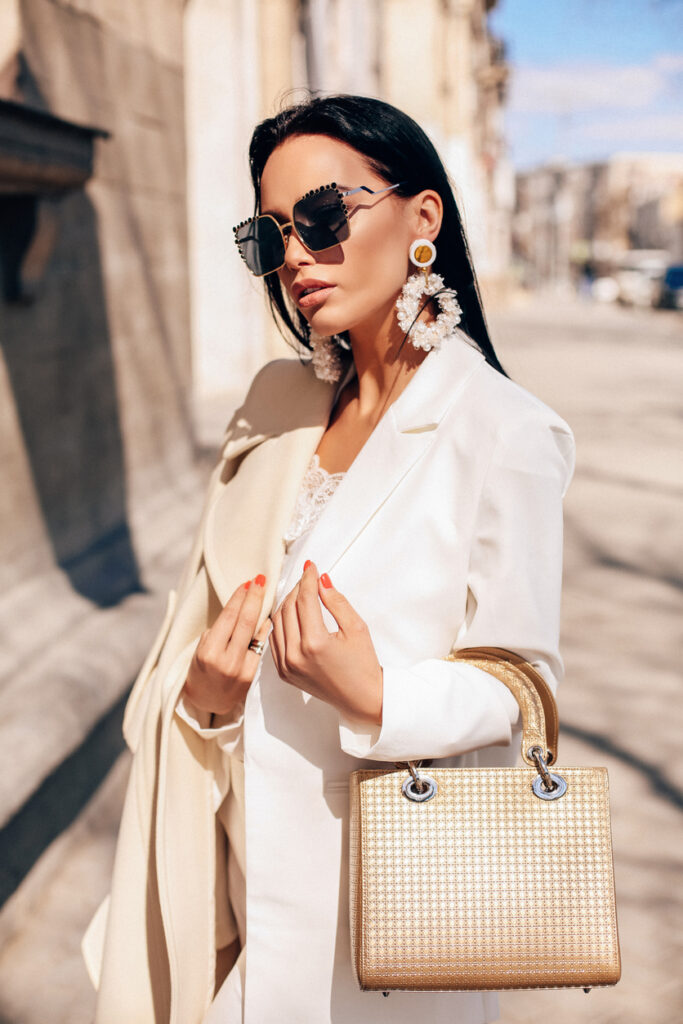
Street
style
reflects
this
evolution
as
well.
The
most
compelling
looks
today
are
often
understated:
neutral
palettes,
clean
lines,
minimal
branding.
Polish
suggests
ease,
and
ease
is
increasingly
aspirational.
What
makes
this
shift
particularly
relevant
now
is
its
alignment
with
longevity.
Polished
style,
or
Old
Money
dressing,
resists
expiration.
It’s
adaptable,
repeatable,
and
deeply
personal—qualities
that
resonate
in
a
world
moving
away
from
disposable
fashion
cycles.
Rather
than
chasing
identity
through
trends,
polished
dressing
allows
style
to
become
a
quiet
constant.
Think
the
finest
quality
cashmere
you
can
pass
to
your
daughter,
and
exceptionally
crafted
herringbone
tweed
jacket,
a
Burberry
trench
coat
that
never
goes
out
of
style.
Ultimately,
quiet,
classy, polished
dressing
has
become
the
new
fashion
status
symbol
because
it
can’t
be
rushed
or
replicated
overnight.
It’s
built
through
intention,
editing,
and
understanding
what
truly
lasts.
In a
culture
that
once
rewarded
excess,
refinement
now
signals
confidence,
maturity,
and
taste.
And
that,
perhaps,
is
the
most
modern
statement
of
all.

