


How to Master Transitional Dressing: The Art of Dressing Between Seasons
 If
If
there’s
one
wardrobe
challenge
that
never
goes
away,
it’s
dressing
for
those
in-between
months
—
when
mornings
feel
crisp,
afternoons
warm,
and
evening
temperatures
dip
again.
That’s
the
essence
of
transitional
dressing:
creating
outfits
that
work
before
the
seasons
fully
flip
and
make
mid-season
style
feel
intentional,
not
improvised.
In
2026,
that
artful
approach
to
layering
and
wardrobe
strategy
is
more
relevant
than
ever.
At
its
core,
transitional
dressing
is
about
adaptability
and
smart
layering,
not
heavy
coats
or
seasonal
extremes.
The
goal
isn’t
to
throw
on
every
layer
you
own
but
to
mix
lightweight
pieces
thoughtfully
so
you’re
prepared
for
unpredictable
weather
while
still
looking
polished.
The
cornerstone
of
this
approach
is
a
collection
of
versatile
staples
—
breathable
tees,
lightweight
knits,
and
mid-weight
outerwear
that
you
can
build
around
for
any
climate
fluctuation.
Think
about
the
pieces
that
bridge
seasons
effortlessly.
A
classic
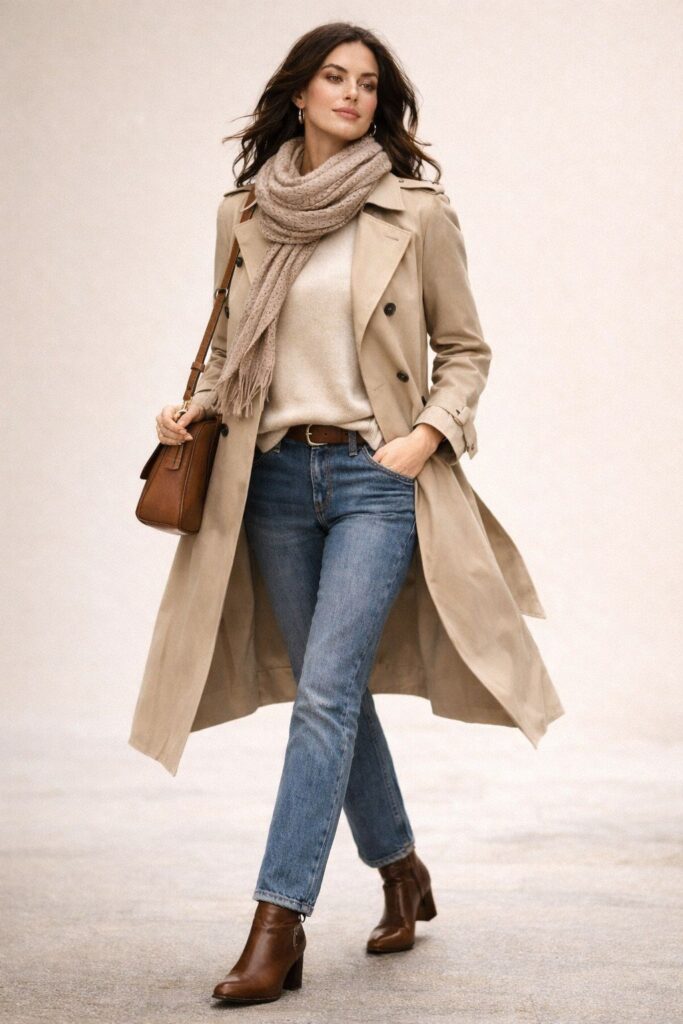
trench
coat
—
preferably
in
a
neutral
tone
—
works
beautifully
over
a
midi
dress
on
a
breezy
day
or
layered
atop
a
cashmere
sweater
and
jeans
as
temperatures
cool.
Denim
jackets
and
leather
bombers
are
also
indispensable:
sturdy
enough
to
fend
off
a
chill
but
light
enough
to
avoid
overheating
in
midday
sun.
One
of
the
most
effective
styling
strategies
is
to
pair
summery
favorites
with
mid-season
accents.
For
instance,
a
breezy
floral
dress
can
live
beyond
summer
when
topped
with
a
lightweight
knit
or
soft
jacket,
grounding
its
looks
for
early
autumn.
Similarly,
camisoles
and
tanks
don’t
need
to
be
packed
away
immediately;
worn
under
a
shirt
or
under
a
mid-weight
blazer,
they
add
structure
and
keep
the
outfit
feeling
fresh
rather
than
wintery
too
soon.
Colour
and
texture
play
an
equally
important
role.
Deepening
your
palette
with
richer
tones
like
olive,
burgundy,
and
camel
signals
the
shift
in
seasons
without
needing
a
full
wardrobe
overhaul.
Mixing
fabrics
—
crisp
cotton
with
suede,
silk
blouses
under
structured
coats,
or
lightweight
knits
with
denim
—
adds
depth
and
visual
interest
while
keeping
your
looks
seasonally
balanced.
Footwear
often
makes
or
breaks
a
transitional
outfit.
Swap
sandals
and
flats
for
versatile
loafers,
ankle
boots,
or
low-profile
sneakers.
These
offer
more
coverage
for
cooler
mornings
but
remain
comfortable
enough
when
the
sun
comes
out.
This
equipment-like
thinking
—
where
the
right
shoe
does
as
much
work
as
the
clothes
—
is
one
of
the
subtle
hallmarks
of
elevated
transitional
dressing.
Accessories
are
another
simple
but
powerful
tool.
Scarves,
hats,
and
structured
bags
can
instantly
shift
an
outfit’s
seasonal
feel.
A
linen
scarf
adds
breezy
elegance
in
late
summer;
a
wool
felt
fedora
gives
the
look
autumnal
polish.
Even
switching
from
a
straw
tote
to
a
leather
crossbody
can
make
the
whole
ensemble
feel
more
intentional.
Ultimately,
mastering
transitional
dressing
is
less
about
what
season
you’re
in
and
more
about
how
you
layer
and
combine.
A
well-edited
wardrobe
that
embraces
flexibility,
texture,
and
thoughtful
colour
combinations
will
see
you
through
temperamental
weather
—
and
through
countless
style
moments
—
without
panic
or
overthinking.

